
Initial Ideas
Vaccine development typically begins not at a pharmaceutical company, but in a research laboratory in a university, medical center or small biotech company. Scientists in these laboratories are most often funded by grants from the government or private foundations. These scientists often spend years researching whether their ideas work, developing reagents and tests to measure their success (or lack thereof), and finally, using animals to test their ideas. In some cases the ideas are tested in small animals like mice, rats or rabbits and then again in larger animals like monkeys.
During this time, several different scientists or groups of scientists may be working toward the same goals: developing a vaccine against a certain virus or bacteria. The progress of these scientists is evaluated by other scientists through presentations at scientific meetings and peer-reviewed papers in journals. Scientists working at pharmaceutical companies often attend these meetings and review journals to see what ideas seem to be working. If any of the work seems promising, the pharmaceutical scientists may approach those working on it about expanding their research toward product development. This process may take five to 10 years.
Phase I Trials
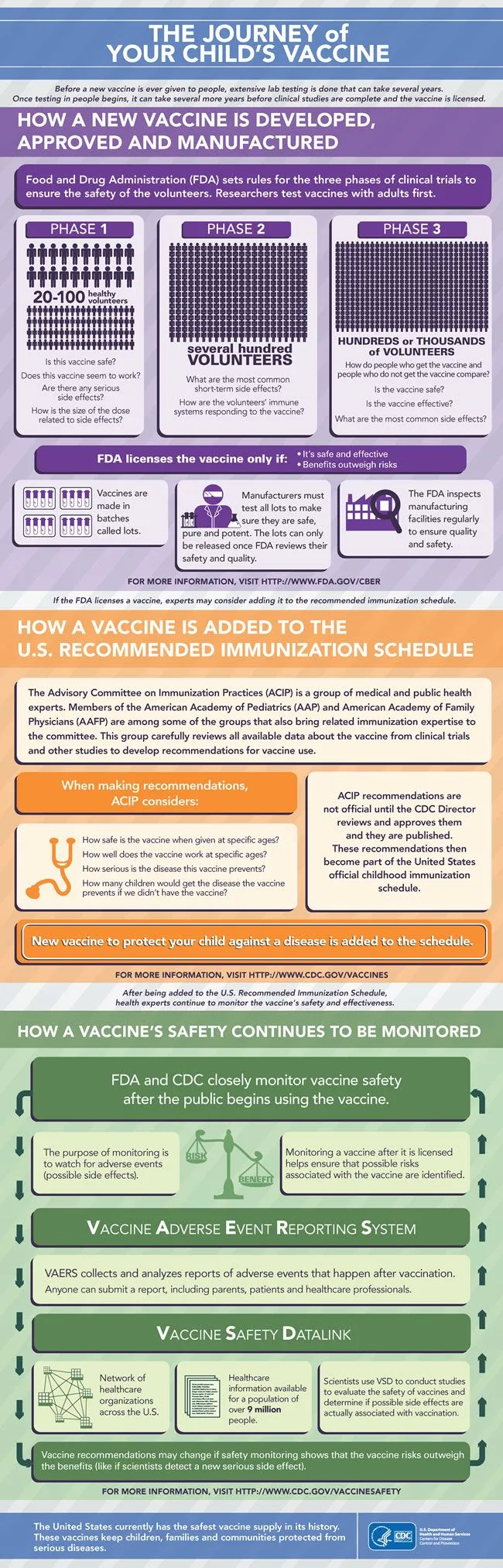
Once an idea appears promising, it must be tested in a small number of healthy adults. These studies usually include less than 100 people and answer two main questions: does the vaccine generate the expected immune response and is the vaccine safe?
During Phase I trials, scientists at the pharmaceutical company must study how to make the vaccine in a quantity large enough for preliminary trials. They also must determine what preservatives or stabilizers to add so that the vaccine does not break down and whether any adjuvants are necessary to generate a strong enough immune response. In addition, company personnel must develop tests that consistently show positive results when expected and negative results when expected, and they must complete an application to inform the Food and Drug Administration (FDA) of their intentions.
This phase often takes one to two years to complete.
Phase II Trials
The next phase of trials involves several hundred people. During this phase, scientists try to determine the proper dose of vaccine to be given, and they continue to study the vaccine's safety. They also continue to define methods for manufacturing the vaccine, stabilizing the product, determining packaging vials, and establishing assays necessary for the trials. An important aspect of this phase is to establish manufacturing consistency, so that each lot comes out with similar results.
The manufacture of the vaccine must also be completed in the building that would be used to make the final product. The company must continue to keep the FDA apprised of its progress and results during this time. At any time during this process the company or the FDA can decide against continued development.
While Phase II trials can take as little as two years, it often takes much longer to complete all of the work necessary for this phase of development.
Phase III Trials
(THIS IS WHERE UNIVERSITY OF MARYLAND AND THE PEDIATRIC CENTER COME INTO THE PROCESS...)
This is the final stage of development before a company requests product licensing, typically taking three to four years to complete.
Studies in this phase involve thousands of participants who resemble the population that will ultimately receive the vaccine (for example, infants for a new infant vaccine). The number of participants is calculated to detect statistical differences between the experimental and control groups, based on factors such as disease frequency in the population, estimated dropout rates, and the sensitivity of the assays used to measure outcomes.
During this phase, the company continues finalizing facility and assay specifications and studies the vaccine’s shelf life—considering distribution to end users (such as doctors’ offices) and storage conditions. All testing sites that recruit participants or handle samples must be closely monitored to ensure protocols are followed consistently. Samples are collected and analyzed to assess immune responses, track disease occurrence, and monitor for adverse reactions.
As in earlier phases, this work is conducted under blinded conditions: no one interacting with participants, testing samples, or analyzing results knows who received the vaccine and who received the control.
After the studies conclude, it takes an additional 18 to 24 months for the company to review data, complete the product license application, and prepare for launch. The FDA—having conducted site visits throughout—then spends about 10 months reviewing the data before the vaccine can be made available to the public.
After licensure, experts for the Centers for Disease Control and Prevention (CDC) will also review the data and determine who should be able to get the vaccine. This is essentially the third set of scientists reviewing the same data. Often, the company or healthcare providers who helped run the Phase III studies will also publish the results in a scientific journal for review by other scientists.
By the time a vaccine reaches the public, it has typically been studied for 15 to 20 years (or longer) in tens of thousands of participants, by thousands of scientists, statisticians, healthcare providers, and other personnel, at a cost of at least $1 billion. Many products never reach this stage. Throughout the trial process, companies continually evaluate whether a product is worth pursuing, and countless ideas are abandoned at various stages of development.
Phase IV Trials (after licensure)
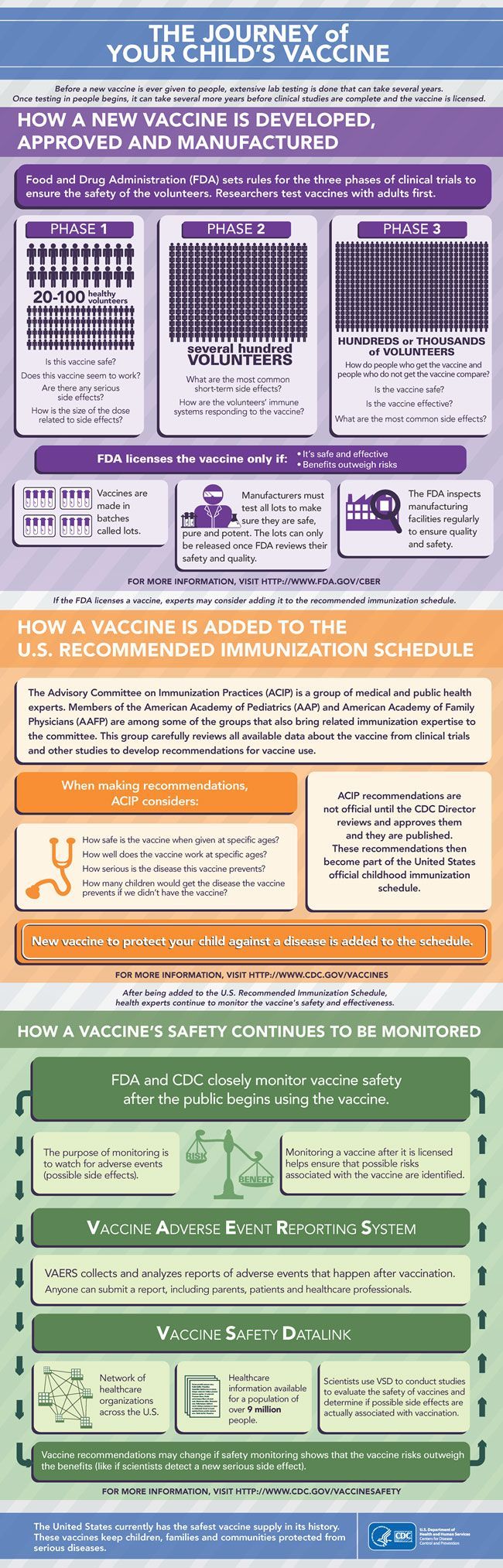
Once a vaccine begins distribution, additional research—known as Phase IV studies—takes place. Because rare side effects may not be detected during Phase III trials, the CDC continues to monitor vaccine safety on an ongoing basis.



Contact Us
Phone:
Fax:
301-695-8604

Office Hours
Monday – Tuesday
8 AM – 7 PM
Wednesday - Friday
8 AM – 5 PM
Saturday (Taney Ave)
8 AM – 12 PM


After Hours
When the office is closed, you have options.
Always call 911 for a medical emergency.
Copyright © 2026
. All Rights Reserved.
Medical Web Design by RemedyConnect.
See our Disclaimer
and Privacy Policy. HIPAA Notice of Privacy Practices |
Website Admin